





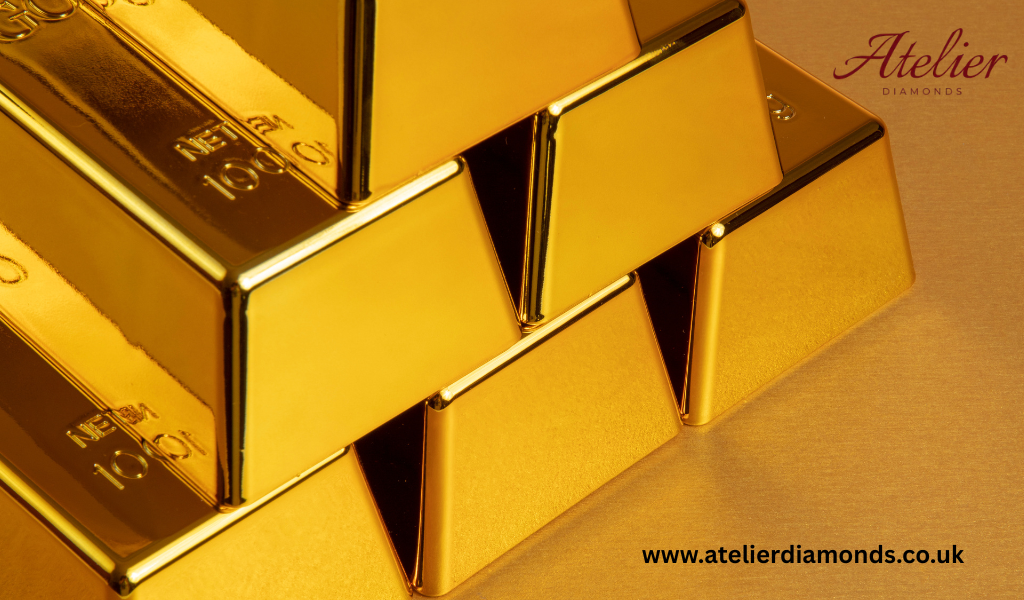
If you’ve already heard of lab-grown diamonds, this concept may ring a bell. But gold is different. It is a metal, an element and something of the natural world in a particular manner. So what does “lab-grown gold” really refer to? How is it made? And why does it matter?
Let’s simplify it further; here goes.
What Is Lab-Grown Gold?
Lab-grown gold is gold that has been generated or refined using more advanced scientific methodologies rather than large-scale traditional mining techniques. It is chemically the same as mined gold. Where atomic structure is concerned, there’s no difference between gold mined from the earth and that which is produced or reclaimed in a laboratory.Gold is itself a natural element (Au). It can’t be "manufactured", as a synthetic material would be. But scientists can either grow or refine gold crystals in lab-controlled environments or extract pure gold from recycled sources using laboratory-based procedures that are cleaner and more accurate.
So when people are discussing lab-grown gold, they typically mean the following:
- Laboratory-refined gold from recycled materials
- Crystalline gold developed through highly predictable science.
- Gold that is created using cutting-edge technology with minimal environmental impact
Read More: How To Choose The Perfect Diamond Engagement Ring In The UK?
How Is Lab-Grown Gold Made?
This can occur in a number of ways. Some of these are already in common use; others are still developing.Advanced Refining of Recycled Gold
Growing gold from recycled paper with embedded silver in it is one of the most popular approaches. Gold is also very much in demand for use in electronics because of the efficiency with which it conducts electricity.
Today, scientists use chemical and electrochemical processes to separate these metals from gold. These processes are highly controlled, that is,
- Less waste
- Lower emissions
- Greater purity
- Reduced environmental damage
Cultivating Gold Crystals in a Laboratory
In the lab, chemists can grow gold crystals with a method called chemical deposition. Gold atoms attach layer by layer onto a surface in conditions created by scientists, forming pure gold structures.
It is still used in technology and research but demonstrates that gold can be generated without the usual needs of mining.
Nuclear Transmutation (Theoretical and Rare)
On paper, gold is a by-product of nuclear collisions involving other elements. This has been demonstrated by scientists at particle accelerators. However, this process is very costly and not commercially viable for the production of jewellery. It’s really a scientific breakthrough more than it is a practical answer.
So basically lab-grown gold in jewellery today mostly relates to responsibly refined and recycled gold created under clean scientific methods.
Why Does Lab-Grown Gold Matter?
Then we dive into the bigger question — why does this matter?Environmental Impact
Gold mining has a huge cost to the environment in its conventional form. It involves:
- Large-scale land disruption
- High water usage
- Toxic substances such as mercury and cyanide
- Carbon emissions
Lab-grown and recycled gold provides a more sustainable option. This means fewer destructive mining practices as we reuse existing gold and recycle it effectively.
This is very important for brands and buyers that care about sustainability.”
Ethical Considerations
Gold mining, on the other hand, has at times been associated with poor labour conditions and conflict areas. Most mines are carefully run, but not all supply chains share this degree of transparency.
Refined gold from labs, particularly when derived from certified recycled materials, allows for more traceability. It can help buyers feel more secure about the origin of their jewels' materials.
Now, in today’s landscape, ethics and transparency are equal to beauty and craftsmanship.
Consistent Quality
As lab-grown or refined gold is processed in controlled environments, purity levels can be very exact. 9ct, 14ct, 18ct or 24ct – the make-up can be closely controlled.
This ensures:
- Consistent colour
- Reliable durability
- High-quality finishes
Is lab-grown gold the same as mined gold?
Yes. Gold is gold, chemically and physically.There is no visual difference if mined gold or lab-refined gold are put side by side. So they melt at the same temperature. They weigh the same. They shine the same.
The only difference is about where it comes from — not the material itself.
That’s what makes this development so interesting. Unlike some alternative materials, lab-created gold does not skimp on authenticity.
How Does It Compare to Lab-Grown Diamonds?
Many people confuse the two.Lab-grown diamonds are formed by mimicking the process of natural diamond growth under high pressure and temperature or through chemical vapour deposition. These are new diamonds created in labs.
Gold, by contrast, exists as an element already. We are not “replicating” gold in that sense. We are treating it or expanding it with scientific methods.
Both movements illustrate a broader evolution in jewellery — one toward innovation, responsibility and contemporary ideals.
Why Consumers Are Paying Attention?
Jewellery shoppers today are better educated than ever before. They want to know:- Where materials come from
- How they are sourced
- What environmental impact they carry
- If their purchase is also aligned with their values
Lab-grown gold enters that discussion easily.
Is It More Affordable?
Currently, lab-refined gold shares market pricing with mined gold as global commodity markets determine the price of gold. Its value is based on weight and purity, not origin.But environmentally friendly technologies expand and mining laws become more strict; alternative sourcing methods could play an increasingly critical function.
Value isn’t just price — it’s about long-term impact.
The Enduring Role of Gold in Jewellery
The jewellery industry is evolving. We’re seeing more:- Recycled metals
- Lab-grown gemstones
- Transparent supply chains
- Sustainable packaging
- Ethical sourcing commitments
- Lab-grown gold is a piece of this larger shift.
Gold will forever be a representation of love, strength & commitment. How we source it, though, is changing.
No, nor should they be — and maybe that’s a good thing.